What is Lemon Tekking
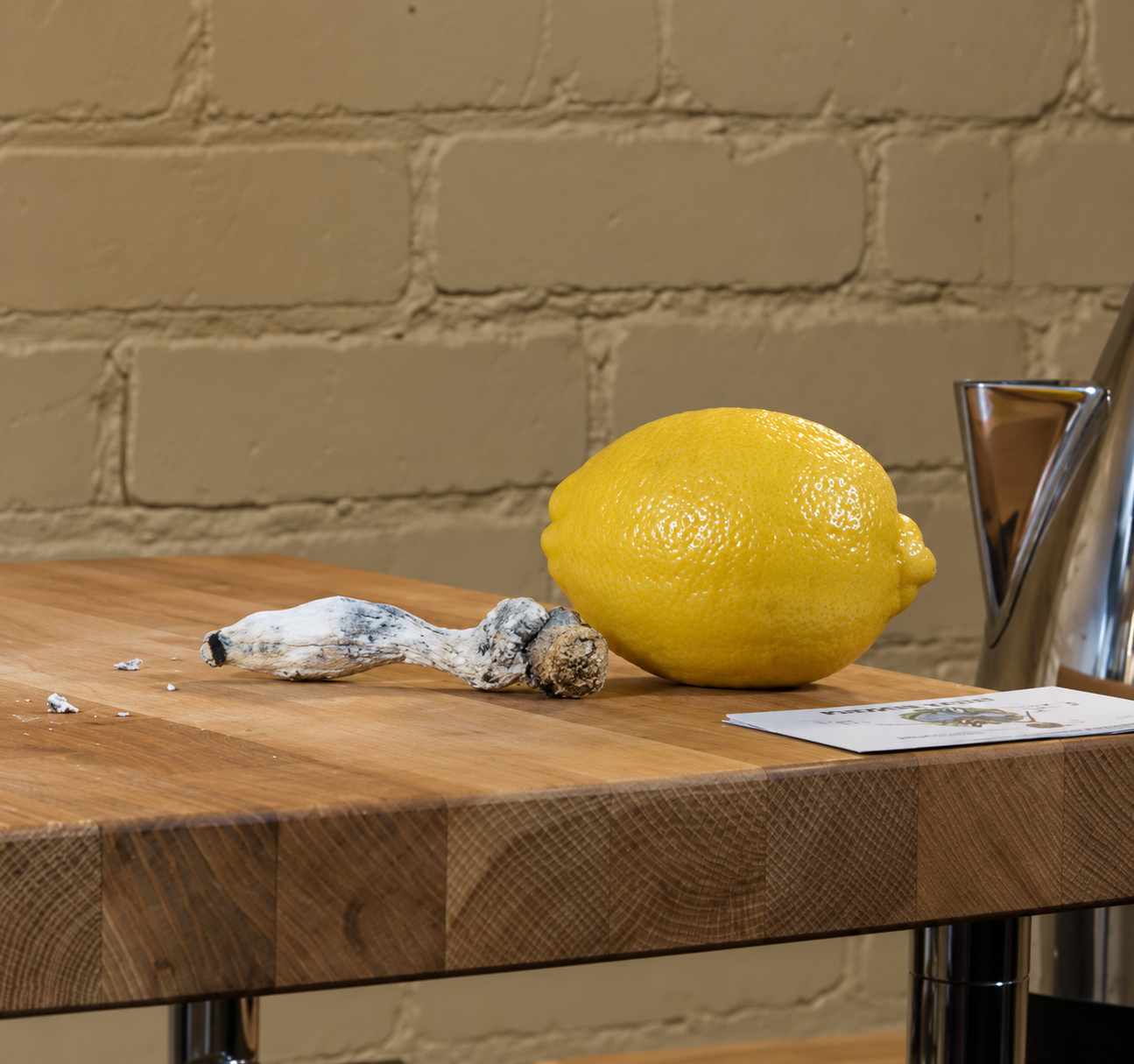
When we talk about consuming mushrooms, we tend to focus on the compounds inside them. But before any of those compounds reach the bloodstream, the body has to deal with the mushroom itself.
Mushroom cell walls contain chitin, a tough structural polysaccharide also found in the exoskeletons of insects and crustaceans. Humans can interact with and partially process chitin, but we don't digest it as readily as many common dietary carbohydrates. For some people, consuming a substantial amount of fungal tissue can also be accompanied by gastrointestinal discomfort.
This is where preparation and delivery method become interesting.
One of the most widely discussed methods is lemon tekking. Online, it is often described simply as a way to make mushrooms “hit harder and faster.” But that explanation skips over the more interesting question.
What happens when we change the physical and chemical environment surrounding a mushroom before the body has to process it?
What Is Lemon Tek?
Lemon tekking is a preparation method associated with psilocybin mushrooms in which mushroom material is exposed to an acidic liquid—most commonly lemon or lime juice—before ingestion.
While it is widely circulated online as a method for making an experience “stronger,” the more interesting questions involve onset timing, digestive experience, body load, and chemistry.
Conceptually, lemon tekking combines two important variables:
Mushroom material is mechanically broken down, increasing exposed surface area.
The material encounters an acidic environment before reaching the stomach.
Breaking mushroom tissue into smaller particles increases its exposed surface area. Moving it into a liquid or acidic environment changes the conditions surrounding that tissue. And reducing the amount of intact fungal structure the digestive system encounters may change the way the experience develops.
Together, these factors may change how quickly compounds become accessible during digestion.
Why Onset May Feel Faster
When digestion has less structural work to do, compounds contained within mushroom tissue may become accessible earlier.
A faster transition can create a noticeably different experiential curve:
Subtle effects may appear sooner
The transition into altered perception may feel sharper
The perceived “waiting period” is compressed
This compression can easily be interpreted as increased potency. A better hypothesis, however, is that the timeline has changed rather than the original dose becoming chemically larger.
In other words, an experience that develops more rapidly may feel stronger because the transition is steeper—even if the total amount of psychoactive material has not increased.
Mushrooms, Structure, and Digestion
Mushrooms are structurally resilient organisms. Their cell walls contain chitin, a structural polysaccharide that humans do not digest particularly efficiently.
With normal oral ingestion, the gastrointestinal system must process dried fungal tissue while compounds contained within that material become available for absorption and metabolism.
Several processes therefore occur between ingestion and psychedelic effects, including:
Physical breakdown and hydration of mushroom tissue
Release and dissolution of compounds from that material
Gastrointestinal absorption
Conversion of psilocybin to the pharmacologically active compound psilocin
Distribution of psilocin through circulation to its sites of action
Changing the physical structure of the starting material could therefore change part of this timeline without necessarily changing the total quantity of psychoactive compounds present.
This same question extends beyond lemon tekking. Tea, powdered material, capsules, chocolates, and whole dried mushrooms all present the digestive system with somewhat different physical matrices.
What About the Acid?
This is where the popular explanation of lemon tekking becomes more complicated.
A common online claim is that lemon juice essentially “pre-converts” psilocybin into psilocin before consumption, performing the work that would otherwise occur in the body. That explanation should be treated cautiously. Psilocybin's conversion to psilocin is a dephosphorylation reaction, and acidity alone should not automatically be equated with the enzymatic metabolism that occurs in the body.
Acid exposure may affect mushroom tissue, extraction, compound stability, and how readily water-soluble constituents leave the fungal material. Combined with finely divided material and a liquid medium, this could alter what reaches the digestive tract and in what physical form. That provides several plausible mechanisms for a change in onset without requiring the stronger claim that lemon juice simply “turns psilocybin into psilocin.”
What the Science Suggests: Acid and Degradation
A recent study examining psilocybin degradation and conversion under acidic conditions helps clarify what might be happening in lemon tekking. The research looked at how mushroom compounds change over time in different acidic solutions, including citrus environments like lemon juice.
What emerges from those observations:
Acidic environments can begin to break down mushroom tissue and expose water-soluble compounds more quickly.
Early exposure to acid may mimic some aspects of gastric digestion, which begins the conversion of psilocybin into psilocin, potentially reducing time spent in the digestive tract before absorption into the brain.
The study does not show increased potency, but it does support the notion that acidity alters how quickly compounds become accessible for metabolic processing.
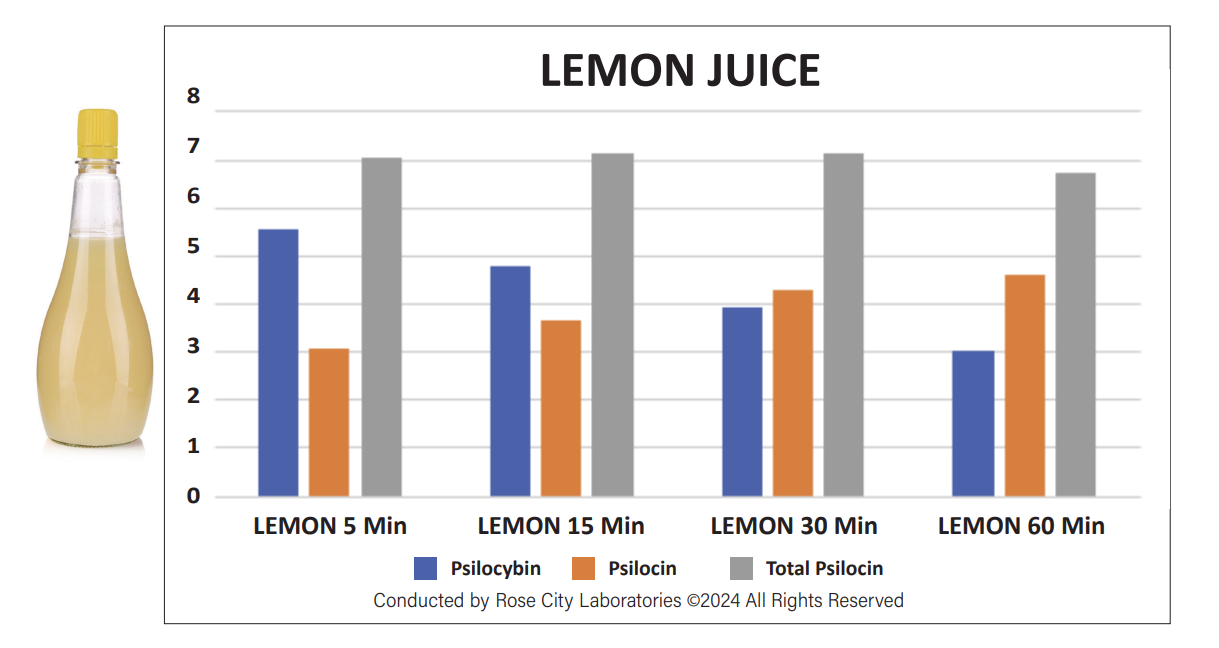
In other words, the science suggests that acid does not create potency—it may accelerate the accessibility of compounds that were already present.
The available chemistry can help generate hypotheses about why people repeatedly report different onset characteristics, but subjective reports should not be treated as pharmacokinetic measurements.
Without controlled comparisons measuring variables such as blood concentrations of psilocin over time, it remains difficult to separate the effects of:
Extraction
Particle size
Acidity
Gastric emptying
Individual metabolism
Expectation
Fasting state
Reduced sensory aversion
The full behavior of psilocybin and psilocin in living digestion is still an open area of study. The phenomenon is therefore interesting precisely because the explanation remains incomplete, but this gives a grounded explanation for what people empirically notice.
Why Some People Prefer Lemon Tekking
People commonly report preferring lemon tekking because of:
Faster perceived onset
Less time spent waiting for effects
Reduced mushroom taste and texture
A more clearly defined beginning to the experience
Less gastrointestinal discomfort in some individuals
None of these observations means the method is inherently more potent or safer.
A faster onset can itself change how an experience is perceived. When the transition happens over a shorter period, there is less time to psychologically adjust to each stage of the experience.
This is one reason why onset speed should be considered part of dose context rather than an irrelevant detail.
A Broader Question About Delivery
Lemon tekking is interesting not because it is exceptional, but because it reveals a broader question about psychedelic pharmacology:
How much of an experience is shaped by the compound and dose, and how much is shaped by the way that dose reaches the body?
Tea, chocolate, capsules, whole dried mushrooms, and acidic preparations present different physical environments before absorption ever occurs.
That makes delivery method a legitimate subject of observation rather than simply a matter of preference.
Understanding those variables—and separating repeatable effects from assumptions surrounding them—is itself a form of harm reduction.
For FOG, that question also extends beyond lemon tekking. Comparing different delivery matrices, documenting their reported onset patterns, and distinguishing plausible mechanisms from established ones may provide a more useful framework than simply describing one method as “stronger” than another.
